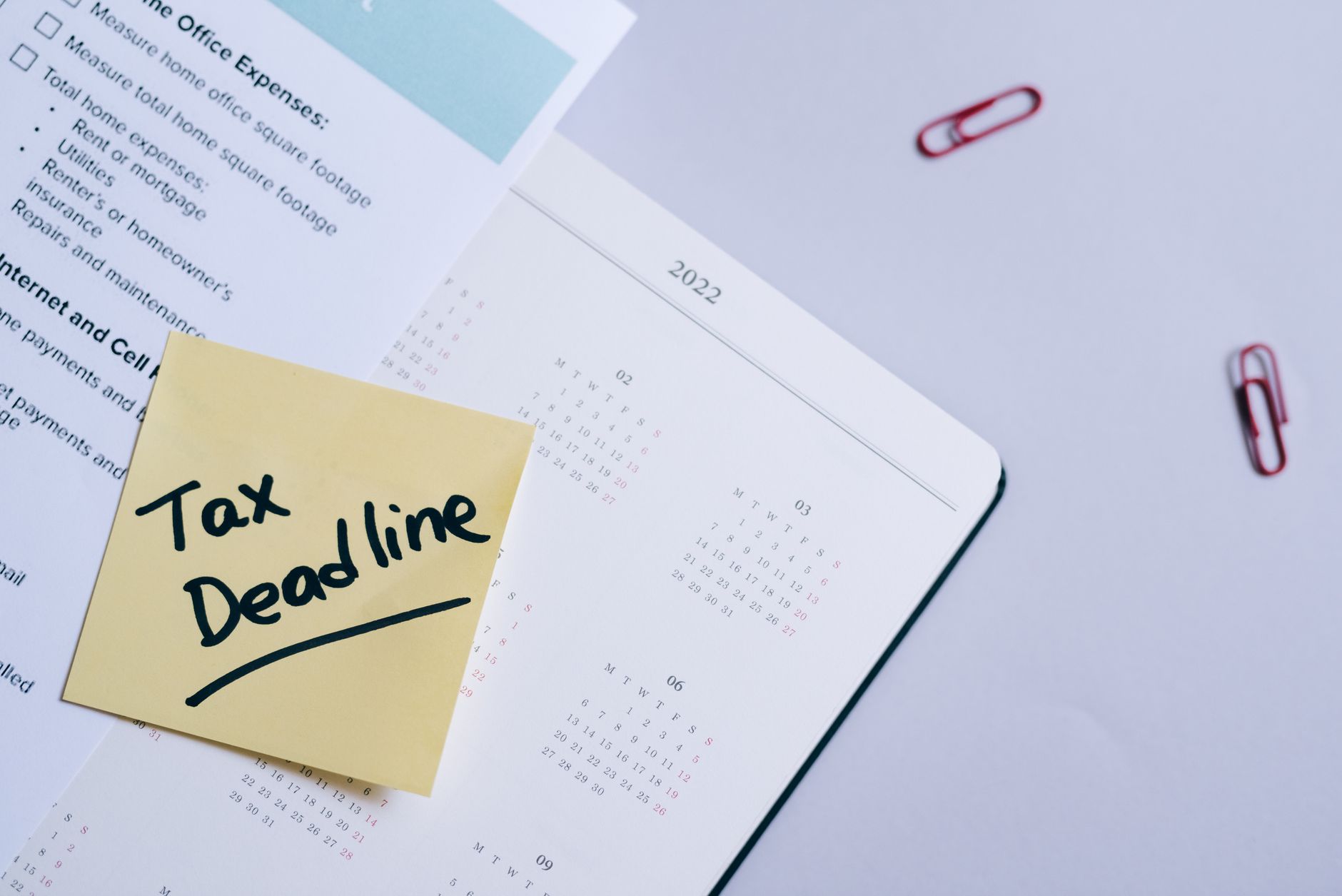
Dates, times, and deadlines are the details a reader trusts most and checks least. That's precisely why errors in them survive until they matter. A transposed day and month in a tender submission, a 2025 that should read 2026, a meeting time written in one time zone when the reader is in another: these aren't typos that embarrass. They're errors that derail.
Proofreading dates and times requires a separate pass from your standard grammar and spelling check. The two tasks use different parts of your attention. General proofreading looks for anomalies. Date and time proofreading requires cross-referencing, format consistency, and arithmetic. You won't catch these errors by reading carefully from top to bottom. You need a method.
Why standard proofreading misses date errors
Your brain reads for meaning, not for numerical precision. When you read "the deadline is 14 March," your mind confirms the sentence is grammatically sound and moves on. It doesn't automatically ask whether 14 March is correct, whether it's consistent with the deadline mentioned on page 3, or whether a US reader will interpret it as April 3. Spell-check won't flag it. Spell-check misses your worst mistakes precisely because the most damaging errors are spelled correctly.
Dates also suffer from context blindness. Writers often draft different sections of a document on different days and forget to reconcile the dates. A proposal drafted over two weeks might reference "next Tuesday" in one section and a fixed date in another, and the two might not align at all.
Build a date and time inventory first
Before you start checking, extract every date, time, and deadline from the document into a single list. Don't try to check them as you read. Pull them out first.
- Every calendar date (day, month, year)
- Every relative reference ("next week," "by Friday," "within 30 days")
- Every time or time range, including any time zone notation
- Every deadline tied to a specific deliverable or action
With the inventory in front of you, inconsistencies become visible immediately. If your document mentions a project start date of 1 October and a kick-off meeting on 3 October, but the cover page says the engagement begins in November, that gap is obvious in a list and invisible in prose.
Check format consistency across the document
Business documents frequently mix date formats because multiple authors contribute, or because the writer copied content from different sources. Common collisions include DD/MM/YYYY and MM/DD/YYYY in the same document, abbreviated month names alongside full month names, and numeric-only dates that are ambiguous to any reader outside the originating country.
Pick one format and apply it throughout. For documents going to international audiences, the written-out format (14 March 2026) removes ambiguity entirely. Numeric formats like 04/05/2026 are genuinely dangerous in cross-border correspondence. A US reader reads that as May 4. A UK or Australian reader reads it as 4 May. Both readings are plausible. Date and number formats in international business writing covers the regional differences in detail if your document crosses borders.
Verify the arithmetic, not just the dates
Dates need to be internally consistent, not just correctly spelled. Check that:
- The number of days between two dates matches any stated duration ("a 10-day review period ending 30 June" should start on 21 June, not 20 or 22)
- Day-of-week references match the calendar date ("the Thursday briefing on 15 October" only works if 15 October actually falls on a Thursday)
- Relative references resolve correctly ("30 days from the date of signing" needs an anchor date, and the resulting deadline needs to match wherever it's stated)
Day-of-week errors are among the most common and the easiest to verify. Pull up any calendar and confirm each one. It takes 10 seconds per date.
Time zones deserve their own check
A meeting time without a time zone is an incomplete piece of information. In a domestic document, the implied time zone might be obvious. In anything crossing state or national boundaries, it isn't. Confirm that every time reference either states the time zone explicitly or is clearly understood from context. Where a time zone abbreviation appears, confirm it's the right one: EST and EDT, for instance, are 5 and 4 hours behind UTC respectively, and confusing them shifts a meeting by a full hour.
Also check AM and PM. A 9 AM start and a 9 PM start are very different things, and both are valid strings that every spell-checker will happily ignore.
Cross-reference deadlines against the source document
If the document you're proofreading references external dates (contract terms, regulatory deadlines, tender closing dates, client-specified milestones), check each one against its source. Don't trust your memory of what the original said. Look it up. A client brief that specified a deadline of 5 November doesn't become 15 November because a writer misread their notes. These are the errors that cost relationships.
This cross-referencing step is especially important in proofreading numbers and data in business documents more broadly, because external references carry the highest risk: the source is authoritative, and any deviation is purely an error.
A targeted final pass
After your main proofreading pass, run a dedicated date-and-time scan. Use the Find function in your word processor to search for common date markers: "/", "January", "February", and the other month names, "AM", "PM", "deadline", "by", "due". Each hit gives you a date or time to compare against your inventory.
Read the dates aloud. This sounds excessive, but it works. "March fourteen" and "April fourteenth" sound different. Your ear catches transpositions that your eye skips over. Reading aloud is the same technique that catches rhythm errors in prose, and it applies equally well to numerical sequences.
Dates, times, and deadlines are the factual skeleton of most business documents. Everything else can be revised in a follow-up message. A wrong deadline usually can't be. Treat these details with the same deliberate attention you'd give a contract clause, because in many documents, that's exactly what they are.