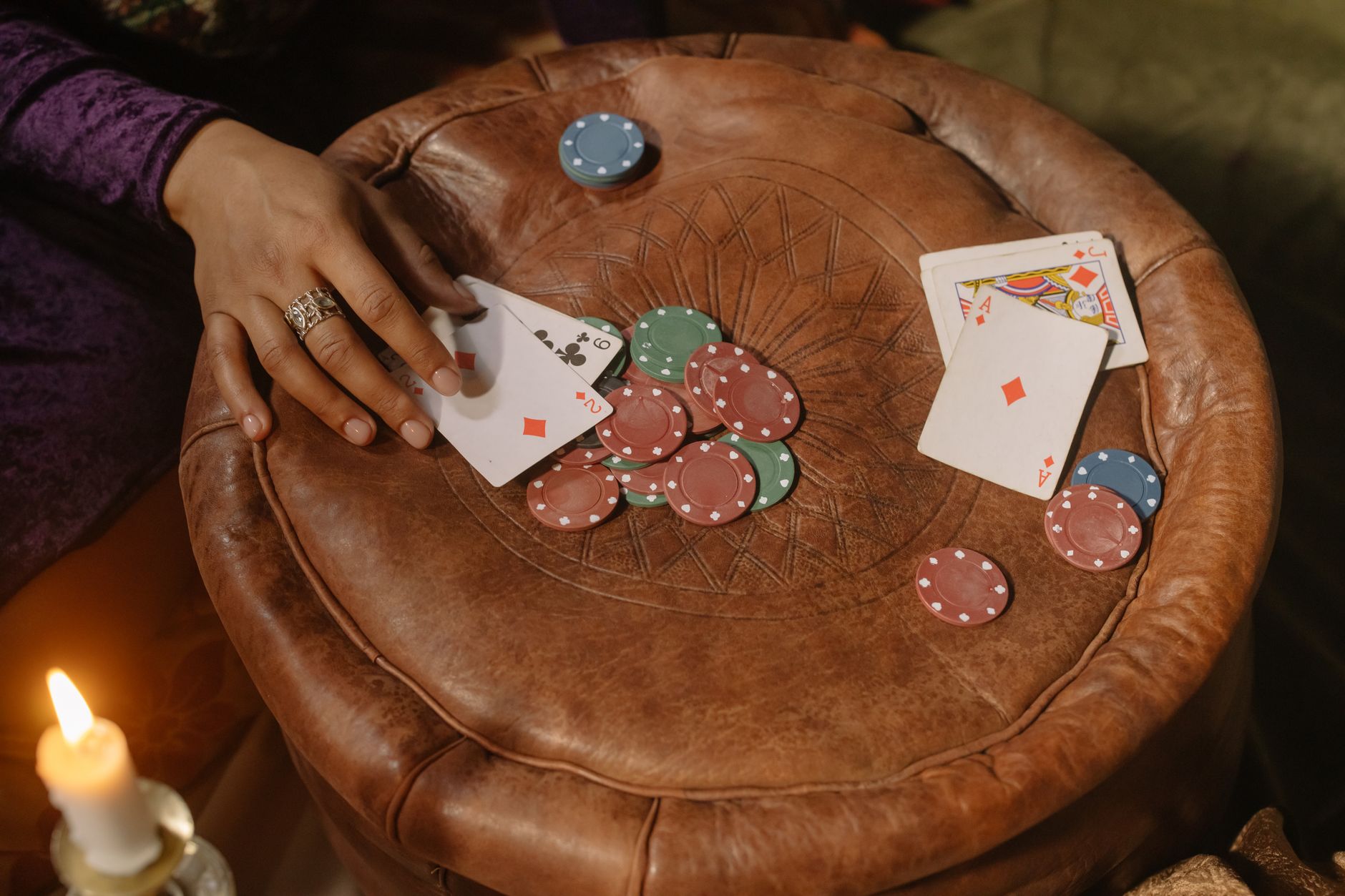
The pass the buck origin sits squarely at the poker tables of 19th-century America. The phrase didn't start as a metaphor for blame-shifting. It started as a literal object: a marker passed between players to indicate whose turn it was to deal. That object, known as a "buck," gave the phrase its first meaning, and the broader meaning we know today followed within a few decades.
What the "buck" actually was
In frontier-era poker, the dealer held considerable responsibility. Dealing could be seen as an advantage or as a burden, depending on the game and the stakes. To track whose turn it was, players passed a small marker around the table. Early accounts suggest the marker was often a buckhorn-handled knife, which is where the word "buck" most likely comes from.
When a player didn't want to deal, they could pass the marker to the next person. That act of passing the buck meant: I'm giving this responsibility to you. The transfer was physical and immediate. It wasn't about blame yet. It was simply about declining a duty.
The first documented use of the phrase in print dates to around 1865, in a collection of sketches by the American writer James Whitcomb Riley. By the 1870s and 1880s, newspaper archives show the expression appearing in contexts that go well beyond card games, already shifting toward its modern sense of dodging accountability.
How the meaning shifted from poker to politics
The move from poker slang to everyday language was fast. This happens with gambling terms: in spades made the same journey, as did dozens of phrases that started at the card table and ended up in boardrooms. "Pass the buck" followed that well-worn path.
By the early 20th century, the phrase no longer required any knowledge of poker to understand. Writers used it to describe politicians who avoided making decisions, managers who deflected complaints, and officials who sent problems up or down the chain rather than resolving them. The marker had become invisible, but the act it described was everywhere.
The phrase reached its most famous expression in 1945. Harry Truman, on becoming president, placed a sign on his desk in the Oval Office that read: The Buck Stops Here. The sign was made by a federal reformatory in El Reno, Oklahoma, and Truman used it throughout his presidency. That sign crystallised the original poker metaphor into a statement about presidential accountability that people still quote today.
Why the poker table is the right origin to cite
Some writers have suggested the "buck" in the phrase refers to a dollar. That reading is intuitive but wrong. The dollar theory doesn't align with the documented timeline or with the specific poker context that every early citation points to. The buckhorn knife theory fits better with both the evidence and the culture of the era.
Frontier gambling culture produced a remarkable number of phrases that entered standard English. Up the ante is another example from the same world: a poker term about raising the stakes that now describes any escalation of pressure or demand. These phrases stuck because they described human behaviour with unusual precision. Passing the buck captures something specific: not just failing to act, but actively transferring responsibility to someone else.
That specificity is what has kept the phrase in circulation for more than 150 years. Vague phrases fade. Phrases that name an exact behaviour stay.
Using the phrase correctly today
To pass the buck means to shift responsibility for a decision or problem onto someone else, usually to avoid blame or discomfort. The phrase carries a clear negative charge. Using it about another person or institution implies criticism. Using it about yourself implies confession.
In business writing, the phrase works well in informal registers: internal emails, commentary, analysis pieces. It sits less comfortably in formal reports or legal correspondence, where the negative connotation can read as accusatory rather than descriptive. If the document is formal, choose a neutral phrase instead: "deferred responsibility," "transferred accountability," or simply a plain description of what happened.
The Truman sign remains the most useful anchor for the phrase. When someone invokes "the buck stops here," they're making an explicit contrast with passing it. Both halves of that contrast have the same poker origin, and understanding it makes the phrase more than a cliché. It makes it a statement with a 150-year pedigree behind it.