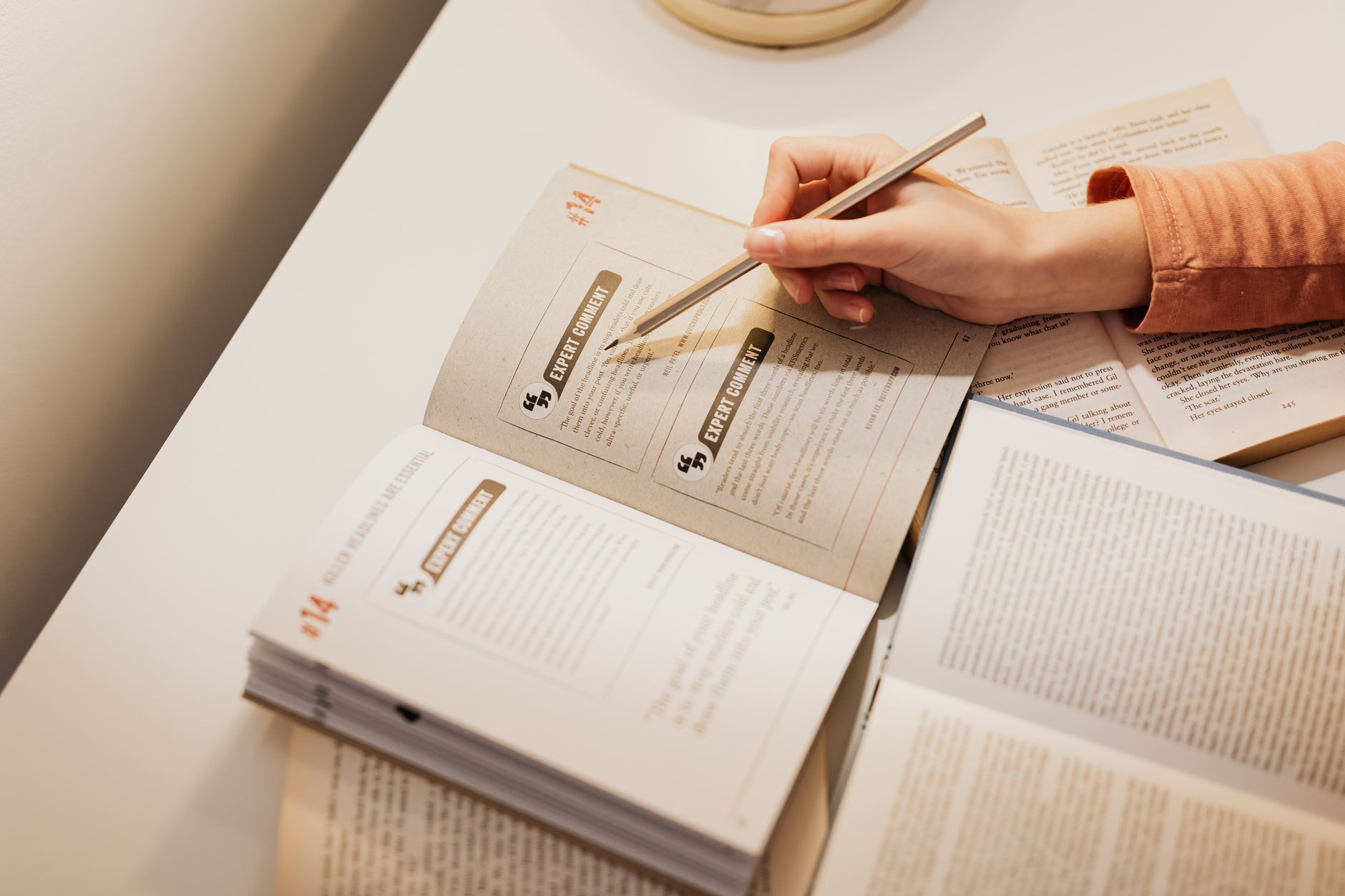
Few punctuation questions generate as much silent panic as words to capitalize in titles and headings. Do you capitalize "and"? What about "is"? Does it matter whether you're writing a report heading versus a book chapter? The honest answer is: it depends on the style guide, but the underlying logic is consistent enough that you can learn it once and apply it almost everywhere.
The two systems: title case vs. sentence case
Before you can apply any rule, you need to know which capitalization system is expected. There are two.
Title case capitalizes most major words. You'll see it in newspaper headlines, book titles, and formal report headers. Chicago, AP, and APA each use title case, with small differences between them.
Sentence case capitalizes only the first word of the title and any proper nouns. It looks like an ordinary sentence with no period at the end. Academic journals, many tech companies, and most British publishers prefer sentence case. It's also easier to apply consistently, which is why it's gaining ground in business writing.
Know which one your organization or publication requires before you write a single heading.
What to always capitalize in title case
When title case is the rule, capitalize these word types no matter where they fall in the title:
- Nouns: "The Report on Climate Adaptation"
- Verbs: "How to Build a Pipeline"
- Adjectives and adverbs: "A Quick and Dirty Guide"
- Pronouns: "What You Need to Know"
- Subordinating conjunctions: "Why Although Matters"
The first and last word of a title are always capitalized, regardless of part of speech. That means "A" at the start of a title gets a capital A, even though you wouldn't capitalize it in the middle.
What to lowercase in title case
This is where writers stumble. In title case, these categories stay lowercase unless they're the first or last word of the title:
Coordinating conjunctions stay lowercase. The standard set is: for, and, nor, but, or, yet, so (remembered by the acronym FANBOYS). "Salt and Pepper," not "Salt And Pepper."
Articles stay lowercase: a, an, the. "A Guide to the Future," not "A Guide To The Future."
Short prepositions are lowercase. Most style guides lowercase prepositions of four letters or fewer: at, by, for, in, of, on, to, up. Chicago lowercases all prepositions regardless of length. AP capitalizes prepositions of four or more letters. Pick one approach and use it throughout a document.
The word "is" causes particular confusion. "Is" is a verb, so it gets capitalized in title case. "The Problem Is Real" is correct. Don't let its short length fool you into treating it like an article.
Hyphenated words: a special case
Hyphenated compounds in titles cause consistent confusion, and it's worth spending a moment here. The general rule under Chicago style is to capitalize both elements if they would each be capitalized as standalone words. "Self-Directed Learning" capitalizes both parts. "Follow-up" lowercases "up" because "up" is a preposition in that compound. AP capitalizes all elements of a hyphenated word except articles, prepositions, and coordinating conjunctions. This matters practically: the rules around whether a compound like "well known" is hyphenated at all affect what you then capitalize.
Proper nouns: always capitalized, in any system
Proper nouns get capital letters in both title case and sentence case. This covers names of people, companies, places, products, languages, and specific job titles when they directly precede a name. "English," "Microsoft," "Paris," "Chief Executive Officer Jane Reed" are all capitalized regardless of where they appear in a heading.
Generic job titles used without a name don't get capitals. "The director approved the report" uses lowercase "director." Capitalize it only when it's attached: "Director Chen approved the report."
Sentence case: simpler, but not simple
Sentence case sounds easy: capitalize the first word, lowercase everything else (except proper nouns). In practice, writers forget the proper noun exception and produce headings like "A guide to microsoft teams" instead of "A guide to Microsoft Teams." Scan every heading specifically for proper nouns before you publish.
One more rule: after a colon inside a title or heading, capitalize the first word if what follows is a complete sentence or an independent subtitle. "Business Writing: A Practical Guide" capitalizes "A." This applies in both sentence case and title case.
Style guide quick reference
The three guides most business writers encounter differ in a few key spots:
Chicago Manual of Style lowercases all prepositions, all coordinating conjunctions, and articles. It capitalizes the first and last word of the title and both elements of most hyphenated compounds.
AP Stylebook capitalizes prepositions of four or more letters (including "With," "From," "Into," "Over," "Through") and capitalizes all elements of a hyphenated word except articles, prepositions under four letters, and coordinating conjunctions.
APA Style uses title case for titles of works within a body of text but sentence case for headings inside an article. That distinction catches people off guard. A journal article's title is in title case on a reference list; the headings inside that same article use sentence case.
If your organization doesn't mandate a guide, choose one and document it in your house style. Inconsistency across headings in a single report signals carelessness more than any individual capitalization error does. This kind of consistency is as important as decisions like choosing the right greeting and salutation at the top of a document: both are first impressions.
Common mistakes and how to fix them
Four errors come up repeatedly in business documents.
Capitalizing "to" in infinitives. "To" in "How to Write" is a preposition, not part of the verb. It stays lowercase under most guides. Only APA treats "to" in an infinitive as part of the verb and capitalizes it. Know your guide.
Lowercasing "is," "are," "was," "be." These look small and forgettable, but they're verbs. Capitalize them in title case every time.
Inconsistent treatment of sub-headings. Some writers apply title case to h2 headings and then slip into sentence case for h3s without realizing it. Apply your chosen system at every level.
Forgetting proper nouns in sentence case. As mentioned above: "google analytics" in a heading is a capitalization error. "Google Analytics" is a proper noun and gets capitals in any system.
Tools like the Title Case Converter let you paste a heading and choose your style guide to check it instantly. They don't replace understanding the rules, but they catch slip-ups quickly when you're working through a long document. The underlying knowledge still matters: a tool can't tell you whether a word is being used as a proper noun or a common one in context.
A practical decision tree
When you're unsure about a word in a heading, run through these questions in order. First: is it the first or last word in the title? Capitalize it. Second: is it a proper noun? Capitalize it. Third: is it a verb, noun, adjective, adverb, or pronoun? Capitalize it under title case. Fourth: is it a coordinating conjunction, article, or short preposition? Lowercase it under title case. Fifth: are you using sentence case? Lowercase it unless it's a proper noun.
That sequence handles about 95% of real cases. The remaining 5% are genuinely contested, and the right answer is whichever your style guide gives you.