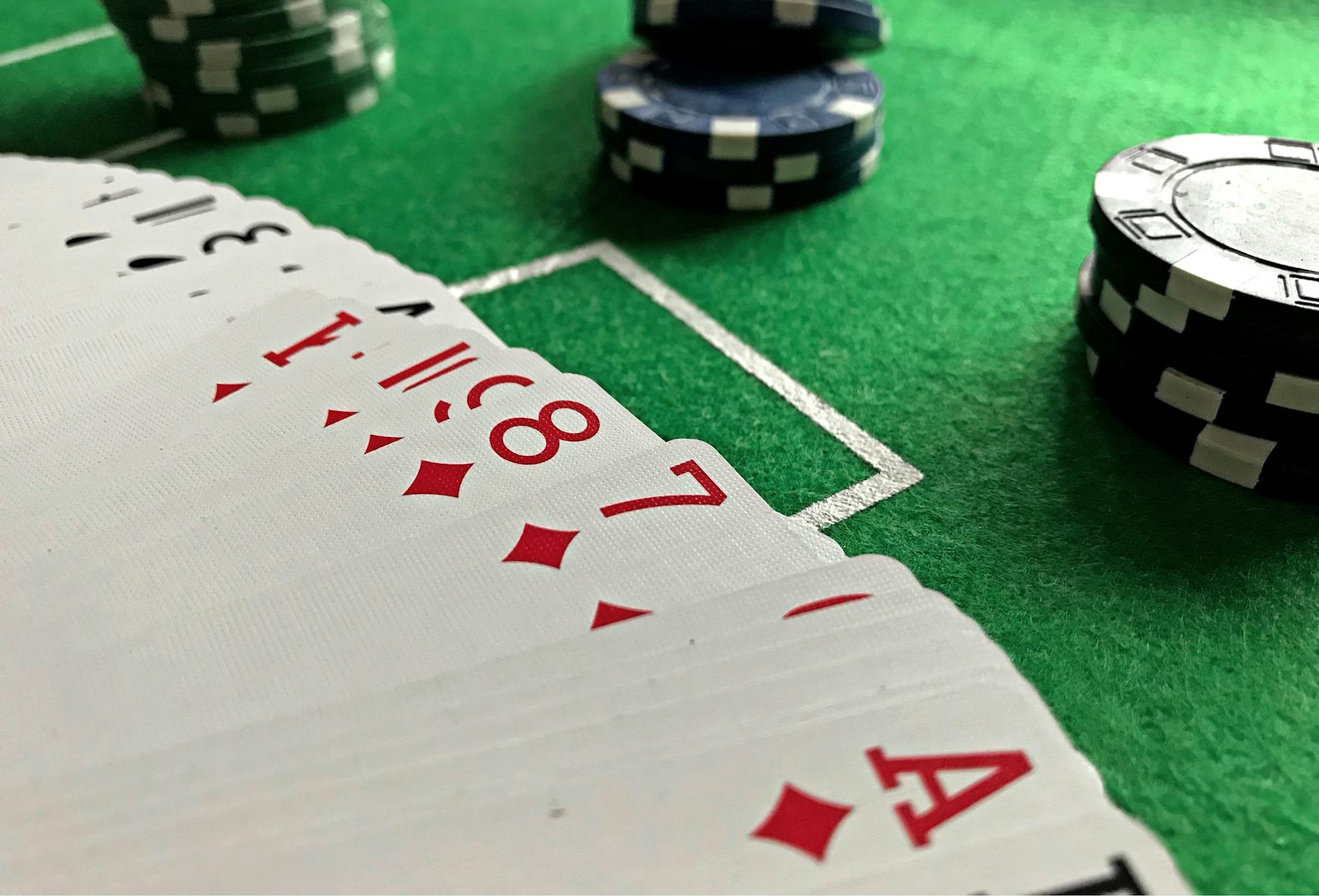
A poker face is a neutral, unreadable expression that gives nothing away. The phrase describes the deliberate act of concealing your emotions, reactions, or intentions from the people around you. It's one of the most recognisable idioms in English, common in boardrooms, sports commentary, and everyday conversation, and it rewards a closer look at how it works and where it came from.
Where "poker face" comes from
The phrase traces directly to the card game poker, where reading your opponent is as important as holding a good hand. A skilled player keeps a blank face regardless of what the cards show. No raised eyebrow for a strong hand. No visible disappointment for a weak one. The face tells the table nothing.
Poker became widely popular in the United States during the 19th century, and the expression entered general usage not long after. By the late 1800s, writers were using "poker face" to describe any person who kept their emotions hidden in high-pressure situations, far beyond the card table. The phrase stuck because the image is so precise: a face locked down under competitive pressure.
It's worth noting that the phrase belongs to the same family of gambling idioms that fills modern English. Phrases like bluff and in the cards come from the same tradition of card-game language filtering into everyday speech.
What the phrase really means
A poker face signals intentional concealment. The key word is intentional. Someone who naturally shows little expression isn't described as having a poker face; someone who actively suppresses their reaction is.
Three things the phrase typically implies:
- The person has a reaction they're choosing not to show.
- There's something at stake, some competitive, social, or professional pressure involved.
- The concealment is deliberate and skilled, not accidental.
That combination of intent and skill is what gives the phrase its weight. Saying someone "maintained a poker face" implies they had discipline under pressure, not just a quiet personality.
How the phrase is used today
In professional writing, "poker face" appears most often in profiles, negotiations, and competitive contexts. A journalist might write that a CEO "kept a poker face during the shareholder meeting." A sports writer might describe a coach who "showed a perfect poker face on the sideline despite the score." Both uses rely on the original sense: control, discipline, and hidden information.
The phrase also works as a verb phrase. "She poker-faced her way through the interview" is informal but widely understood. In casual speech, people say someone "has a great poker face" as a compliment, meaning they're hard to read under pressure.
Culturally, the phrase received a significant boost from Lady Gaga's 2008 hit "Poker Face," which introduced the idiom to a generation that may never have played a hand of cards. The song uses the phrase in its original sense: hiding true feelings while performing a kind of emotional bluff.
Register and tone
Poker face sits comfortably in informal and semi-formal writing. It works in magazine profiles, blog posts, business journalism, and casual emails. It doesn't belong in legal documents, formal reports, or academic writing, where concrete, neutral language is expected.
In formal contexts, you'd replace "maintained a poker face" with something like "showed no visible reaction" or "remained expressionless." Same idea. Different register.
If you're uncertain about idioms like this in professional documents, the broader question of tone and register is worth working through carefully before you draft.
Common mistakes and confusions
Writers sometimes confuse "poker face" with related ideas that aren't quite the same thing. A "stone face" suggests coldness or lack of empathy, not necessarily concealment. A "deadpan" expression is neutral for comic effect, often performed openly. A poker face is specifically about hiding something that exists underneath. The concealment is the point.
Some writers also use the phrase too loosely, applying it to anyone who isn't visibly emotional. That weakens the phrase. Reserve "poker face" for situations where there's something being actively hidden, where stakes are present and the person is choosing not to reveal their hand.
A quick summary
Poker face means a deliberately neutral expression that hides your true thoughts or feelings. It comes from 19th-century card-game culture, where reading opponents' faces was a competitive skill. Today it's used broadly to describe any act of emotional concealment under pressure. Use it in informal and semi-formal writing when you want to convey disciplined self-control, not simply quietness or reserve.