The proper use of P.S. is one of those small details that separates polished business writers from everyone else. P.S. stands for postscript, from the Latin post scriptum, meaning "written after." For centuries, letter writers used it to add a thought after they'd already signed off. Today, P.S. still appears in business emails, sales letters, and direct mail, and it works because readers notice it. Studies on email reading patterns consistently show that the eye jumps to the P.S. almost as quickly as it jumps to the subject line.
What P.S. actually means
P.S. marks a note added below the formal close of a letter or email, after the signature. The idea is that you've finished your message, signed your name, and then thought of something worth adding. That "afterthought" quality is precisely why P.S. works so well as a persuasion tool: it feels spontaneous and direct, even when it's carefully written.
P.P.S. follows the same logic. It means post post scriptum, a second note added after the first. In practice, P.P.S. is rare in professional writing. If you find yourself reaching for it, the real problem is usually that your main message needs tightening.
How to format P.S. correctly
The formatting varies by style guide, but the most widely accepted forms in business writing are P.S. and PS (no periods). Both are correct. The form with periods is more traditional and remains the standard in formal correspondence. The form without periods is common in digital copy and marketing emails, where brevity rules.
What's not correct: P.s., p.s. (all lowercase), or Ps with mixed capitalisation. Choose one consistent style and stick with it across your documents. If your organisation uses a style guide, follow that. If you're unsure, P.S. with capital letters and periods is the safe default.
For a full breakdown of formatting specifics, including where to place the line in an email body, see this guide on how to format P.S. in an email or letter.
When to use P.S.
P.S. earns its place in three situations.
- To reinforce a key point. Sales letters and fundraising emails have used P.S. this way for decades. Repeat your main call to action, your deadline, or your offer in one crisp sentence. Readers who skim straight to the bottom get the message without reading the body.
- To add a genuinely secondary point. If you have a small, related note that doesn't fit naturally in the body of the message, a P.S. keeps the main text clean. "P.S. The venue has changed to the third floor." That's a legitimate use.
- To add a personal touch. In relationship-building correspondence, a brief P.S. can carry a warmer, more informal note that would feel out of place in the body. "P.S. Congratulations on the new role."
When not to use P.S.
Don't use P.S. to introduce information that belongs in the main message. If a point is important enough to need explanation, it goes in the body. A P.S. that runs three sentences long has stopped being a postscript and started being a poorly placed paragraph.
Don't use it in every email. A P.S. draws attention precisely because it's unusual. Use it constantly and it loses that effect entirely. Reserve it for messages where you genuinely want a second moment of emphasis, or where the afterthought framing adds something the body can't.
Avoid using P.S. in internal memos or short transactional replies. "Thanks for confirming. P.S. Let me know if you need anything else" reads as padded and informal in most corporate contexts. The same goes for very short emails: if your entire message is two sentences, a P.S. looks forced.
P.S. in email vs. printed letters
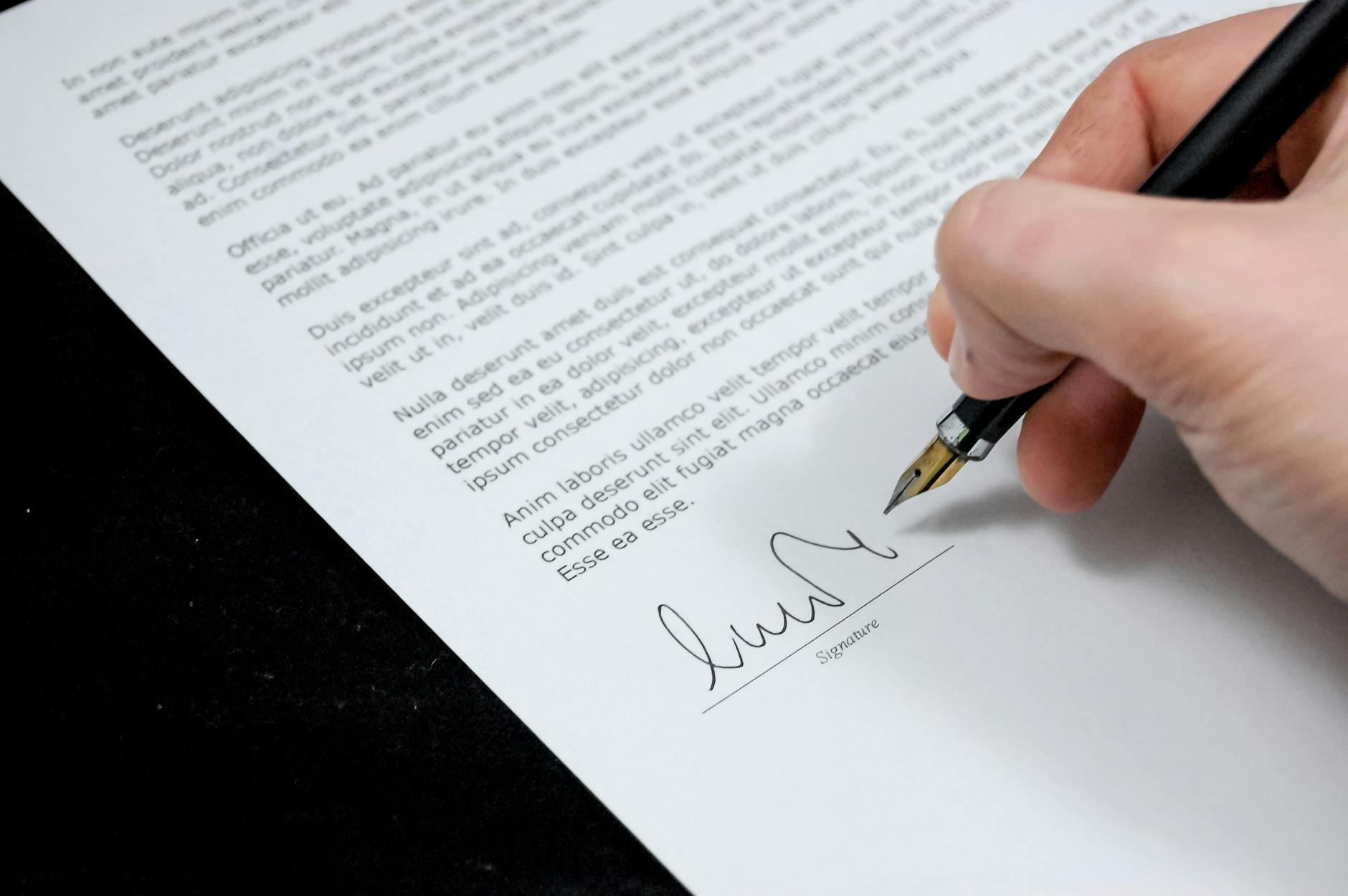
In printed letters, P.S. appears below the handwritten signature, flush left, with a line of space separating it from the sign-off. In email, it appears below your email signature block. Both placements make it visually distinct from the body of the message, which is exactly the point.
One practical note: in emails, your signature block sits between the close and the P.S. Some writers find this awkward and move the P.S. above the signature, but that breaks the convention. The signature should still separate the body from the postscript. If your email client makes this difficult, consider whether a P.S. is the right tool for the message at all.
P.S. and the psychology of the close
Direct-response copywriters have long known that the close of a message carries disproportionate weight. The P.S. sits at the very end, which means it's the last thing a reader encounters and one of the things most likely to be read at all by skimmers. That's a valuable position. Use it for your sharpest line, your clearest call to action, or your most human moment.
The same principle applies in business letters. A well-crafted business letter earns its reader's attention from the first sentence, but the P.S. can do real work at the end: restate the ask, note the deadline, or add warmth that the formal body couldn't carry naturally.
Think of P.S. as a tool with a specific job. Keep it short. One to two sentences is the ceiling. Write it last, after the rest of the message is finished, so the content actually reflects what you want to add rather than what you forgot to include.
Common mistakes to avoid
The most common mistake is using P.S. to deliver important information that should have been in the email body. If someone might miss your P.S., they've missed something critical. Don't hide essential facts there.
A close second: writing a P.S. that contradicts or undercuts the main message. "Looking forward to working together. P.S. Please let us know if the timeline doesn't work for you." That second sentence does the opposite of building confidence. It reopens a question the body should have resolved.
Finally, watch your tone. The P.S. often reads as more casual than the rest of the message. In very formal correspondence, a P.S. can feel out of place regardless of its content. Read the room before you add one.
Get the P.S. right and it becomes a reliable finishing tool: noticed, read, and remembered. Get it wrong and it looks like an afterthought in the worst sense of the word.