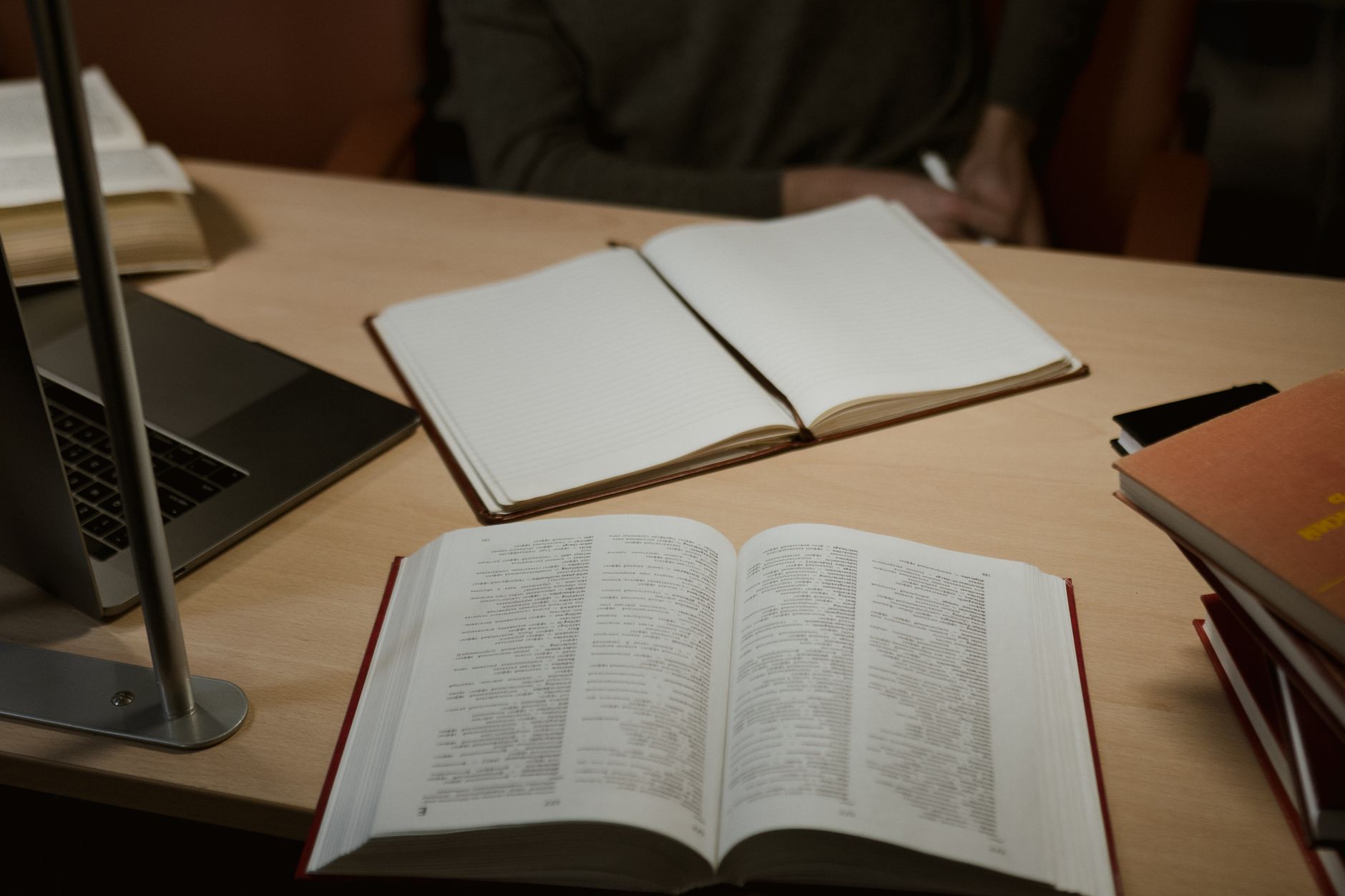
Most writing books sit on desks unfinished. They're long, abstract, and aimed at novelists nursing a manuscript rather than professionals who need to write a clear brief by Thursday. Short books on writing that professionals actually finish share a different quality: they respect your time, they stay specific, and they change how you work before you've even reached the last page.
The seven titles below are all under 200 pages. Most are under 150. Each one earns a place on this list by being genuinely practical for workplace writing, not just inspiring in a vague way.
Why length matters for professional readers
A business writer isn't looking for a creative writing course. The job is to communicate clearly, quickly, and in a way that moves things forward. Long writing books often treat that as a warm-up problem rather than the main event. Short ones can't afford padding. They have to make every chapter count.
There's also a completion effect. Finishing a book changes how you apply it. A reader who reaches the final page is far more likely to act on the advice than one who stopped at chapter four. Slim books get finished. That makes them more useful in practice, even if a longer book covers more ground.
Seven short books worth your time
1. "On Writing Well" by William Zinsser (paperback edition: 321 pages, but Part I is 50 pages and stands alone)
Zinsser's core argument fits in a sentence: clutter is the enemy. He's writing about nonfiction, which means almost everything he says applies directly to business prose. Part I covers principles; Part II covers methods. Even if you only read Part I, you'll write tighter sentences immediately. The book has sold over a million copies since it first appeared in 1976.
2. "The Elements of Style" by Strunk and White
At 105 pages, this is the shortest serious writing reference in print. William Strunk Jr. first wrote the rules for his Cornell students in 1918; E.B. White revised and expanded them in 1959. The Elements of Style covers usage, composition, and style in a format that fits in a jacket pocket. Some of its prescriptions are dated, but the core advice on brevity and clarity holds. Read it once a year.
3. "Writing That Works" by Kenneth Roman and Joel Raphaelson
Roman and Raphaelson both worked at Ogilvy and wrote this book for people who write memos, reports, proposals, and emails. Not fiction. Not journalism. Business documents. At 178 pages it's a quick read, and it covers everything from subject lines to executive summaries. The chapter on memos alone is worth the price.
4. "Nobody Wants to Read Your Sh*t" by Steven Pressfield
The title is the argument. Pressfield, who wrote "The War of Art," makes the same point Zinsser does but from the angle of advertising and storytelling: no reader owes you their attention. You earn it in the first line. At 272 pages the book is longer than most on this list, but the chapters are short (some under a page) and it reads in a single sitting. Professionals who struggle with opening lines find this one clicks faster than anything else.
5. "Dreyer's English" by Benjamin Dreyer
Benjamin Dreyer spent decades as copy chief at Random House. His book is a style guide written as entertainment, which sounds impossible until you read it. Dreyer's English covers grammar, punctuation, and word choice with wit and specificity. It runs to 272 pages but the reference section at the back accounts for a large chunk, so the readable portion is closer to 160 pages. Particularly useful for writers who want concrete rules rather than abstract principles.
6. "Clear and Simple as the Truth" by Francis-Noël Thomas and Mark Turner
This is the most demanding book on the list, but it's also the most useful for anyone who writes documents that need to persuade. Thomas and Turner define "classic prose style" as writing that treats the reader as an intelligent equal and hides all the effort. At 240 pages it takes a weekend, but the framework it gives you for revising your own work is worth more than any grammar checklist.
7. "How to Write Short" by Roy Peter Clark
Roy Peter Clark wrote this book specifically for the age of email, social media, and tight word counts. At 260 pages it covers tweets and subject lines alongside longer forms, but every chapter is applicable to professional writing. Clark's argument: short writing is harder than long writing, and it deserves the same craft. This is the one to read if you know your emails are too long and you haven't been able to fix it.
How to actually use a book like this
Reading any of the above once is enough to notice problems in your own writing. The change doesn't come from reading again. It comes from applying one principle a day until it becomes habit.
Pick one rule from whatever book you're reading and use it deliberately on every piece of writing for a week. Then pick another. That pace is slower than reading the whole book in a weekend, but it's far more likely to stick. If you want to extend that kind of structured practice, online writing courses for professionals can give you the feedback loop that a book alone can't provide.
For quick-reference support between books, the site also keeps a curated set of free guides, checklists, and templates worth bookmarking that cover the most common business writing challenges without requiring any reading time at all.
What these books have in common
Every title on this list gives you a specific, repeatable test for whether a sentence is working. Zinsser asks: does every word earn its place? Strunk asks: is the active verb doing the work? Clark asks: could this be shorter without losing anything? That's the pattern. Not inspiration. A test you can apply in two seconds while editing your own work.
Short books on writing that professionals actually finish work because they skip the throat-clearing. No lengthy history of the publishing industry. No extended meditations on the meaning of voice. Just the rule, the reason, and the example. That's all working writers ever needed.