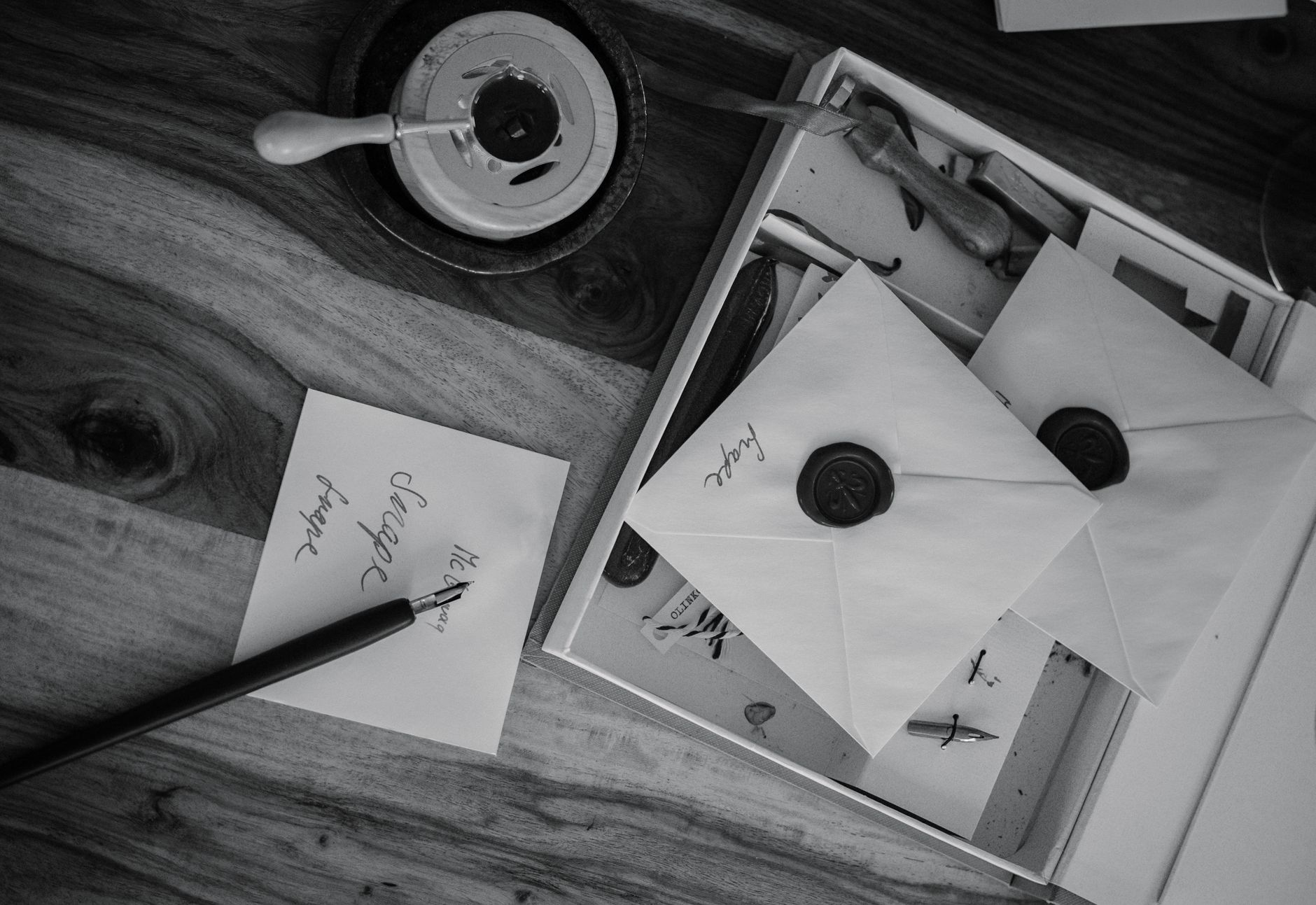
The salutation of a formal business letter is the first line your reader actually processes, and it shapes everything that follows. Get it right and the reader relaxes. Get it wrong and the reader is already on guard before reaching your first sentence.
The standard structure of a formal salutation
A formal business letter salutation follows a predictable pattern: a greeting word, a courtesy title, and a surname. The most common form is Dear Mr. Chen, or Dear Dr. Okonkwo: The greeting word is nearly always "Dear." Not "Hello," not "Good morning," not "Hi." Those belong in email. In a formal letter, "Dear" remains the accepted standard across North American, British, and Australian usage.
The punctuation after the salutation varies by geography. In American English, a colon follows the name: Dear Ms. Ramirez: British and Australian conventions typically use a comma: Dear Ms. Ramirez, Neither is wrong. Match your punctuation to your audience's regional expectations.
Choosing the right courtesy title
The courtesy title is where most writers stumble. The core options are Mr., Ms., Mrs., Dr., and Prof. Each carries a distinct meaning, and picking the wrong one can undermine an otherwise professional letter. For guidance on the differences between Miss, Mrs., Ms., and Mx., the rules for each title cover every professional scenario in detail.
Two principles keep you safe in most situations. First, use Ms. when you don't know a woman's marital status. Ms. is neutral and widely accepted. Second, always default to the title the person uses for themselves. If a client signs their own correspondence as "Dr. Walsh," use Dr. Walsh. If they sign as "Jamie Walsh" with no title, match that.
Academic and professional titles take precedence over courtesy titles. A letter to a medical doctor uses Dr., not Mr. or Ms. A letter to a professor uses Prof. if the person holds that rank and uses it in their professional identity. When someone holds multiple titles, use the highest or the one they prefer.
When you don't know the recipient's name
You've been asked to write to a company, but you can't find a named contact. This is one of the few situations where a generic salutation is acceptable, though it's still worth trying to avoid it. A quick call to reception to ask for the correct name and title takes two minutes and immediately makes your letter stand out.
If a name genuinely isn't available, the three realistic options are:
- Dear Hiring Manager, (for recruitment correspondence)
- Dear Customer Service Team, (for letters directed at a department)
- Dear Sir or Madam, (for entirely unknown contacts, though this reads as dated)
"To Whom It May Concern" is technically valid but carries considerable baggage. Whether "To Whom It May Concern" still belongs in formal writing is a longer discussion, but the short answer is that more specific alternatives almost always serve you better. Use a department name, a role, or a team before reaching for that phrase.
Addressing multiple recipients in a formal letter
Letters addressed to two or three named recipients list each salutation on its own line:
Dear Mr. Tanaka,
Dear Dr. Petrov,
This format works for two people. For three or more, it starts to look unwieldy. The cleaner approach is to address the senior person by name and acknowledge the group in the opening sentence: Dear Ms. Adeyemi, and colleagues, For mixed-gender groups without named individuals, Dear Team, or Dear Members of the Committee, work cleanly in a formal context.
Formal letters vs. formal emails: different rules apply
It's worth being explicit here: the salutation conventions for a formal letter and a formal email are not identical. Letters carry a more conservative register, which is why "Dear" remains compulsory and first names are rarely appropriate in a first-contact letter. Email salutations have their own separate logic, shaped by the medium's speed and informality. If you're drafting an email rather than a printed letter, the rules for a professional email salutation apply instead.
One difference stands out immediately. In a formal letter to someone you've never met, using a first name in the salutation reads as presumptuous. Dear John, might be fine in an email to a contact you've spoken with. In a formal letter, Dear Mr. Harrington, is the right call until the relationship develops enough that first names are clearly mutual.
Common mistakes to fix before you send
Spelling the recipient's name wrong is the most costly error. It signals that the letter was not written with care. Always verify the spelling from an official source: the recipient's own letterhead, their company website, or their email signature.
Using the wrong gender marker is equally damaging. If you don't know and can't find out, Ms. is safer than guessing between Mr. and Mrs. Better still, use the person's full name without a title: Dear Jordan Kim, Full-name salutations are gaining ground in formal correspondence precisely because they sidestep gender assumptions while remaining respectful.
Don't use an honorific and a first name together: Dear Mr. David is wrong. The title pairs with the surname. Dear Mr. Holloway or Dear David are both correct depending on the register. The hybrid is neither.
Finally, check the punctuation. A missing colon or comma after the salutation is a small error, but formal correspondence is where small errors get noticed.